Showing posts with label hi-tech. Show all posts

Saturday

Toyota will create new versions of sportcars Supra and MR2

Toyota Supra

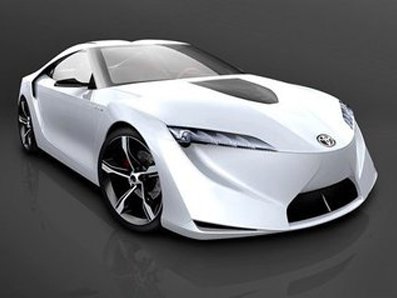
Toyota intends to head manufacturers of hybrid sportcars. Anyway, the next four years the company will make new versions of well-known sport cars MR2 and Supra. Ideological successors of these models will receive a hi-tech stuffing.

Replacement MR2 will take place in the end of 2013, thus the new car will equip with a hybrid power-plant on the basis of the petrol motor. Initially designers Toyota wished to establish on this car engine V6, however success Honda CR-Z in the Japanese car market has changed of they decision.

Supra creation of new generation goes practically in parallel with preparation of compact sports coupe FT-86 as term of its exit also has been shifted for 2013. However, without a competition of novelty Toyota do not remain, as the powerful corporations already declare about creation of hybrid cars, because: Honda (Honda CR-Z), Nissan (Nissan Juke) and Mitsubishi (Mitsubishi PX-MiEV) — have the cars on a full electric platforms.

For example, Nissan prepares two-door sports electrocars on the basis of Leaf platform, and Mitsubishi — the two-door sports version of a city electromobile i-MiEV. Besides, the hybrid unit will receive and Mitsubishi Evolution of the next generation.

Toyota Supra Hybrid

Thursday

Toyota adjusts manufacture of the mass harmless car

Toyota FCHV

At the moment of an exit on the market, cost of similar cars will be record-breaking low, despite of novelty of technology. Toyota Motor has extended the new information concerning development of own program of cars on alternative fuel elements. The company counts, that their cost at the moment of an exit on the market will be «shocking low».

2011 Toyota FCHV

Toyota Motor it is full determination to present the car on alternative fuel (hydrogen) which on availability will compete with petrol, simultaneously possessing a number of essential advantages, first of all in respect of profitability and ecological compatibility. Toyota it's satisfied by progress which already managed to be reached and level of the developed technologies.

In 2015 cars on hydrogen fuel will enter the market, allegedly, irrespective of, whether the infrastructure for their service and refuelling will be developed enough or not. At present the Japanese motor-car manufacturer how consumers will concern new type of cars worries. The hybrids, in particular special version Prius should become a certain marketing prototype Plug-In.

Serial cars on hydrogen fuel Toyota will be developed on the basis of the technologies, continuing to be improved on prototype FCHV. It's constructed on the basis of model Toyota Highlander/Kluger, but it at all does not mean, the company underlines, that the first serial car on fuel elements becomes Highlander. Most likely it will be much more compact model.

It's necessary to notice, that the unique Japanese car on alternative fuel is Honda FCX Clarity, accessible in Japan and the USA in original hire-rent. To buy model while rent is impossible, and here, for example, in California will manage in $600/month.

FT-CH Hybrid Concept by Toyota

Related Posts: Toyota

Saturday

5 questions on automobile GPS-navigation

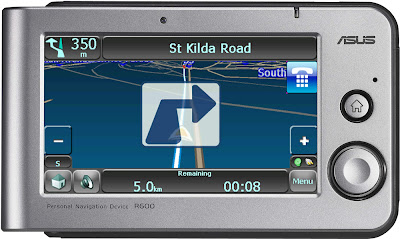
GPS-receiver

1. What is GPS?

GPS is an abbreviation from English name Global Positioning System. Basic co-operating elements GPS is 24 space companions NavStar (are started and belong to the USA) and millions receivers on a surface of the Earth.
The system so works: the receiver catches a signal from 3 and more companions, measures time of a delay of passage of a signal from each of them and automatically counts the site — geographical co-ordinates: width, a longitude, and also height above sea level. These data the device processor correlates to a navigation chart loaded into memory of the device. Thanks to it the user sees the map image on which "point" is shown and moves on the display is he with the GPS-receiver.

2. What represent GPS-receivers what they happen?

It is group of electronic devices which are united only by one — presence of the special module for reception of a signal from companions. In a technical characteristics way GPS-devices can be very different. Depending on mission, GPS-navigators happen automobile, sea, aviation, portable tourist, professional geodetic. But, first of all, GPS-navigators are intended for informing of the motorist concerning a site on a district map, the such original Car Tips.

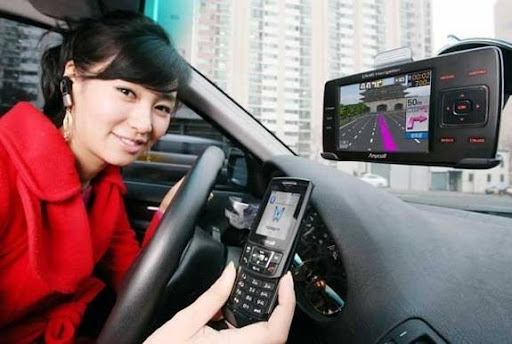
Exist also so-called. GPS-modules — the devices containing only the receiver, connected to the laptop or a handheld computer. Often GPS the module already regularly at factory is built in multimedia system of the car. Also it is necessary to mention electronics with the built in GPS-receiver: a handheld computer, laptops, cellular telephones, portable radio sets.

3. What accuracy of GPS-navigation?

The navigator as the manufacturer declares, defines a site to within 3-5 m. However very many here depends on number of companions which "see" the device and, besides, from navigation charts. The matter is that for civil use navigation charts in scale not more largely than 1:1000 are resolved...
However, such scale and accuracy of navigation are quite comprehensible to automobile travel, after all by the car go for many hundreds kilometres.

4. What price of GPS-navigators?

From $300 to 700. The price of the navigator influences, first of all - functionality. It is a memory size on which the number of loaded navigation charts depends, the power of the processor which is responsible for speed and support 3D, presence of the touch screen, support of vocal helps. Besides it, the price depends on the manufacturer: so, the Taiwan navigators are much cheaper (from $50-100) Japanese.

5. Where to take electronic navigation charts for information loading?

Practically always they are on sale in the same place, where also navigators. The Internet can be an additional source of acquisition.
Personal Navigation Device